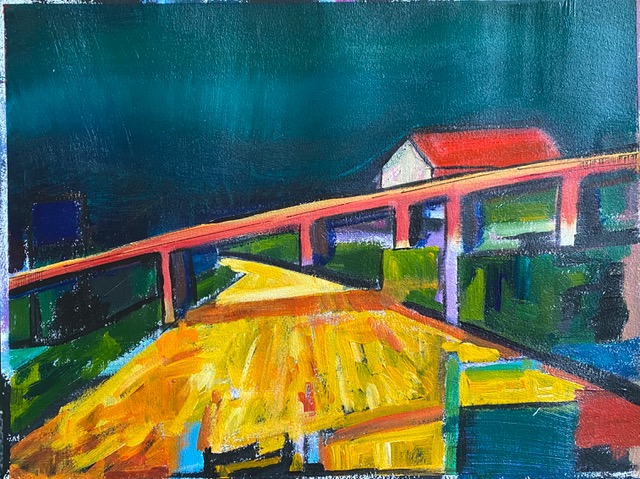
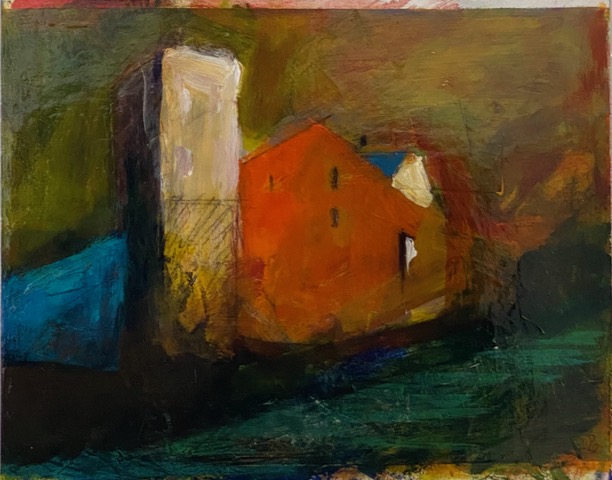
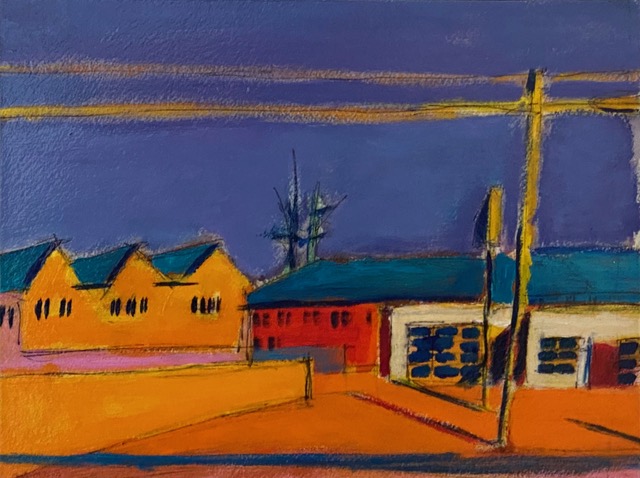
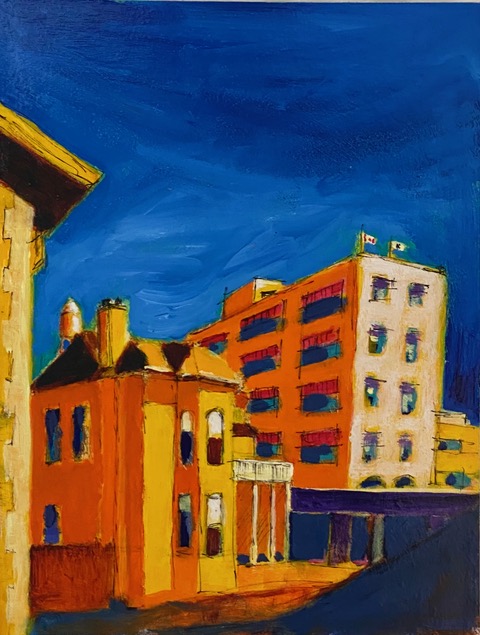
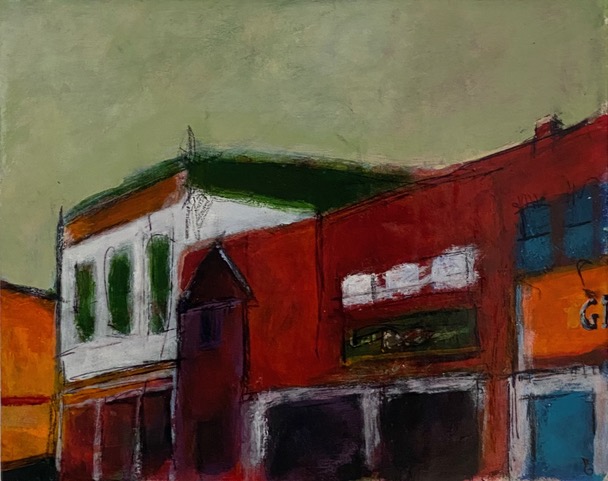
W2606A: Abstracting Urban Landscapes with David Geene

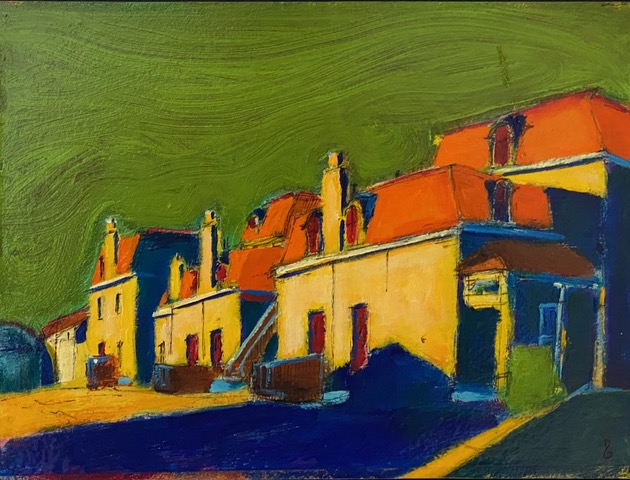
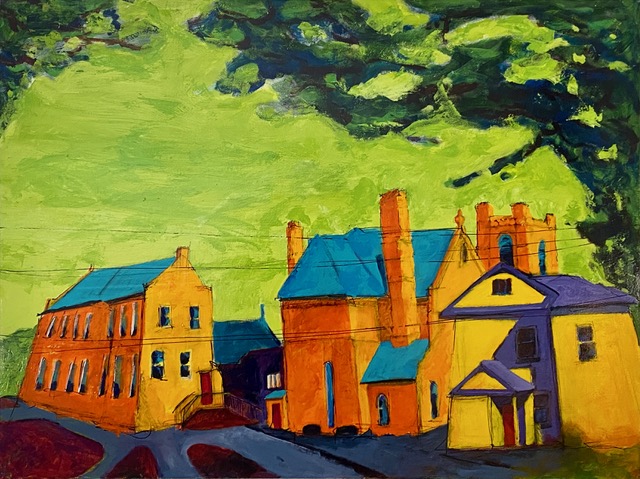
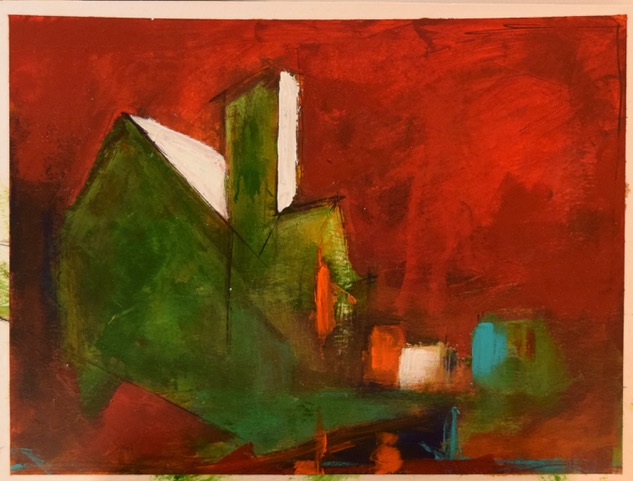
In exploring how to capture the abstracted essence of the architectural landscape, you will be working from your own photographs and/or sketches of urban or rural architecture. These will preferably not be full “portraits” of buildings or structures. Try instead to capture unusual angles, strong light contrast, or muted light through fog, rain, snow, and/or combinations of old and new structures. A personal connection to the images you bring is beneficial. Some additional images will also be available.
Please also bring any scripts which have special meaning or relevance to you or to the image(s) you bring (poems, quotes, narratives, your own writing).
To warm up, we will explore the use of colour, paint strokes, loosening restrictions. We will break the white surface of the substrate using script, free sketching, drawing with paint, and develop layers through the use of washes, glazes, scumbling, sanding, …
When it comes to colour decisions, we will consider saturation, tone, and intensity rather than realistic colour, focusing on contrast, dark and light, shadow or blur. We will try to capture shape, contrast, edges, and atmosphere, working from big to small … refining the image, but not getting too tight.
In the afternoon, after critiques, feedback, and consideration of next steps, and because there is not time for this step in the workshop, I will demonstrate my process of mounting paper on panels— preparing the panel, mounting the paper with gel medium, pressing, trimming, and varnishing.
Date: Friday, June 12, 2026, 9:30 am – 4:00 pm
Location: PACE, 201 McDonnel St. – Room 17, Peterborough, ON, K9H 2W1
Course Fee for non-members: $143.75
Materials List:
- at least 2-3 pieces of acid free paper (heavy sketchbook paper, Arches Oil or Watercolour paper, or comparable) … sizes up to you (canvas boards or canvas pads are also acceptable). Regular stretched canvasses don’t lend themselves well to this approach.
- paint: acrylic, watercolour, or oil paint … palette is up to you, but don’t expect to be painting the actual colours of your subject
- your choice of brushes and other mark making tools: old, bristly brushes are great, rounds, flats, filberts, angled, fan, stencil brushes …The choice is up to you! Use house painting brushes (1-3”), palette knives if desired, rubber bladed tools, texture making tools
Optional Materials:
- Charcoal (medium or hard, pencils, or sticks), acrylic and/or permanent ink pens, pastel
- Sand paper or scrub pad (80-120 grit) … small amount
- A ruler or other straight edge, masking tape